A Beginner’s Guide to Baseball: America’s Pastime
Baseball, often called America’s Pastime, is a sport that captures the essence of teamwork, strategy, and individual skill. While it is most popular in the United States, baseball has a global following, with various leagues and competitions worldwide. Whether you’re completely new to the sport or looking to brush up on your knowledge, this article aims to introduce you to the basics of baseball—from the venue and equipment to roles and fundamental rules.
The Venue
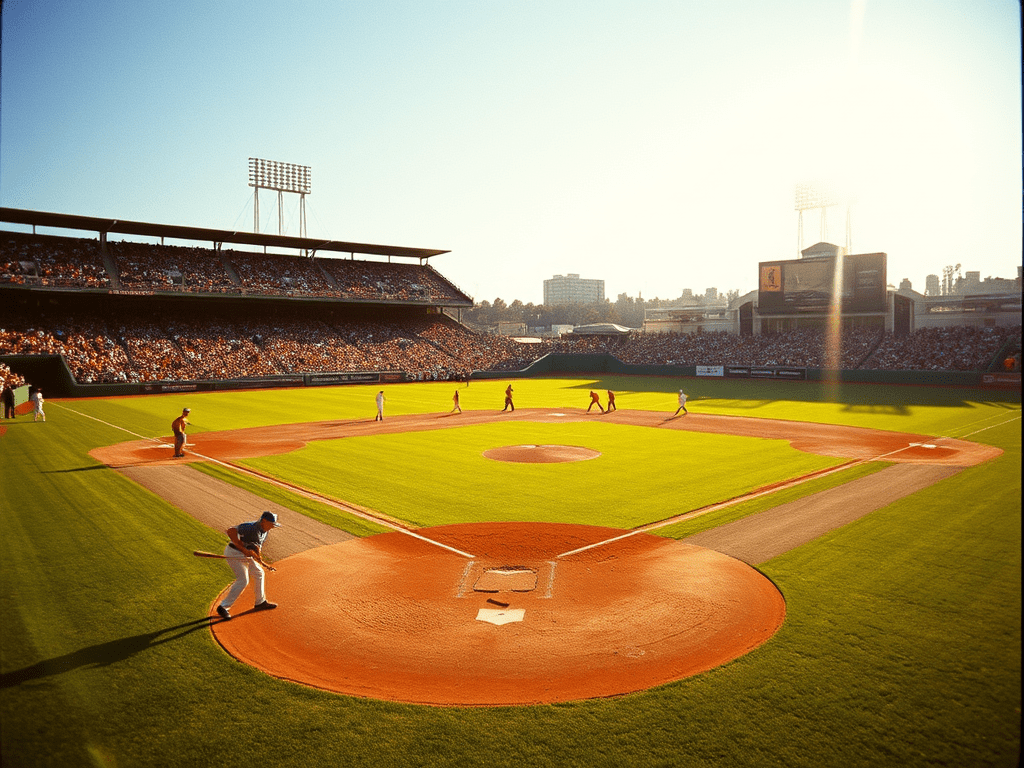
The game is typically played on a field known as a "baseball diamond," consisting of a square infield and a larger, semi-circular outfield. The four bases—first, second, third, and home—are positioned at the corners of the square. The distance between the bases varies depending on the level of play but is usually around 90 feet.
-
Infield: The area inside the square consisting of the bases, pitcher’s mound, and home plate.
-
Outfield: The larger grassy area surrounding the infield.
-
Pitcher’s Mound: A raised mound of dirt in the center of the infield where the pitcher stands to throw the ball toward home plate.
-
Dugout: Benches along either side of the field where teams sit when not on the field.
Equipment
Here are the essential pieces of equipment used in baseball:
-
Baseball: A round ball made of cork and rubber, covered in leather.
-
Bat: A rounded wooden or metal rod used by the batter to hit the ball.
-
Glove: Leather gloves worn by players to catch the ball.
-
Cleats: Specialized shoes with spikes for better grip on grass and dirt.
-
Helmet: Protective gear worn by batters and base runners to protect their heads.
-
Uniform: The clothing worn by each team, usually consisting of a shirt, pants, and a cap.
Roles
Each team consists of nine players, and the roles can be broken down as follows:
-
Pitcher: Throws the ball toward home plate to get the batter out.
-
Catcher: Positioned behind home plate, catches the ball thrown by the pitcher.
-
Infielders: Includes the first baseman, second baseman, shortstop, and third baseman. Their primary role is to catch ground balls and get runners out.
-
Outfielders: Includes the left fielder, center fielder, and right fielder. They catch fly balls and prevent base runners from advancing.
-
Batter: Tries to hit the ball pitched by the pitcher.
-
Base Runners: Players who run around the bases after hitting the ball.
Basic Rules
-
Objective: The objective of the game is to score more runs than the opposing team. A run is scored when a player successfully moves around all the bases and returns to home plate.
-
Innings: A standard game consists of nine innings, each with a top (visiting team bats) and a bottom half (home team bats).
-
Outs: Each team tries to get three outs when they are on defense. An out can occur in various ways, including a strikeout, a groundout, or a flyout.
-
Strikes and Balls: A batter receives a "strike" for each missed swing or if the pitch is within the strike zone but not hit. A "ball" is a pitch outside the strike zone. Three strikes result in a strikeout, while four balls allow the batter to walk to first base.
-
Hits: A batter aims for a hit, allowing them to become a base runner. Types of hits include singles (reaching first base), doubles (reaching second), triples (reaching third), and home runs (rounding all bases).
-
Tagging and Force Outs: A base runner can be tagged out if they are touched by the ball while not on a base. A force out occurs when an infielder catches a ground ball and throws it to a base before the runner arrives.
-
Fielding: When on defense, the team must catch fly balls, ground balls, and tag or force out runners to get outs.
-
Pitching: The pitcher aims to throw the ball in such a way that the batter either misses (strike) or hits it ineffectively, leading to an out.
Baseball is a nuanced and deeply strategic game, and this is just the tip of the iceberg. As you watch or play more, you’ll become familiar with advanced rules, strategies, and terminologies like ‘bunt,’ ‘double play,’ ‘bullpen,’ and many more. For now, though, you’re equipped with the basics to understand and appreciate the beautiful game of baseball.
Major League Baseball: The Pinnacle of Professional Baseball
Major League Baseball (MLB) is the oldest professional sports league in the United States and Canada, tracing its roots back to the 19th century. As the premier destination for baseball talent worldwide, MLB has grown into an international phenomenon, with fans from all corners of the globe. This article aims to give you an overview of MLB’s structure, key events, and significance in the realm of sports.
Structure and Teams
Major League Baseball is divided into two leagues: the American League (AL) and the National League (NL). Each league consists of three divisions—East, Central, and West—and each division is home to five teams. That totals 30 teams across MLB.
-
American League: Known for its designated hitter rule, which allows teams to use another player to bat in place of the pitcher.
-
National League: Follows traditional baseball rules, requiring the pitcher to bat.
Notable Teams
Some of the most successful and popular teams in MLB history include the New York Yankees, Boston Red Sox, Los Angeles Dodgers, and the Chicago Cubs. These teams not only have a strong fan following but also have rich histories filled with championships and legendary players.
Key Events
-
Regular Season: Running from April through September, each team plays a 162-game schedule, battling it out within their divisions and leagues. The goal is to qualify for the postseason.
-
All-Star Game: Held in mid-July, this event features the league’s top players from the American and National Leagues. It’s a showcase of talent, with fan voting often determining the starting lineups.
-
Postseason: This is the knockout stage held in October, also known as the "October Classic." The division winners, along with Wild Card teams (teams with the best records who didn’t win their divisions), compete in a series of rounds leading to the World Series.
-
World Series: The champions of the American and National Leagues face off in a best-of-seven series to determine the overall MLB champion. The team to win four out of seven games lifts the coveted Commissioner’s Trophy.
Significance in Sports Culture
MLB holds a special place in American culture. Names like Babe Ruth, Jackie Robinson, and Derek Jeter have transcended the sport, becoming cultural icons. Beyond sports, MLB has influenced various aspects of life, from fashion (the baseball cap) to language ("touch base," "out of left field"). The league also commemorates historic moments, such as Jackie Robinson breaking the colour barrier in professional baseball, making MLB not just a league but also a mirror reflecting social change.
Modern Influence and Challenges
While MLB remains highly popular, it faces challenges, including the debate over the use of technology (like instant replay), concerns about the pace of play, and how to attract younger fans in the digital age. Despite these hurdles, MLB continues to be a multi-billion dollar industry, with lucrative TV contracts and increasing international interest.
Conclusion
Major League Baseball is not just a sport but a deeply ingrained part of American and global sports culture. With its storied history, iconic teams, and legendary players, MLB continues to be the gold standard for professional baseball worldwide. Whether you’re a casual fan or a baseball aficionado, the MLB season offers endless excitement, drama, and a unique blend of individual skill and team strategy.
So whether you’re catching a quick game on TV or planning a trip to one of the 30 ballparks, a journey into the world of MLB is a home run for any sports enthusiast.
The 10 Most Influential Baseball Players in History
1. Babe Ruth
Often cited as the greatest baseball player of all time, Babe Ruth revolutionized the game with his home run-hitting prowess. Playing primarily for the New York Yankees, Ruth set numerous records and was a cornerstone of baseball’s transition from a low-scoring, defensive affair to a more offense-oriented game. His charismatic personality and larger-than-life figure made him a cultural icon, transcending the sport itself.
2. Jackie Robinson
Jackie Robinson broke Major League Baseball’s color barrier in 1947 when he joined the Brooklyn Dodgers. His courageous move set the stage for the integration of professional sports in America. Robinson was not only a symbol of social change but also an incredible player, earning Rookie of the Year and later becoming an MVP.
3. Lou Gehrig
Known as the "Iron Horse," Lou Gehrig’s durability and hitting skills made him one of the greatest first basemen in history. He set numerous records and was a two-time MVP. Gehrig is perhaps best known for his "Luckiest Man" speech, given after being diagnosed with ALS, a disease that now bears his name.
4. Ted Williams
Ted Williams, often called the greatest hitter who ever lived, had a career batting average of .344 and was the last player to hit over .400 in a single season. He missed several peak years due to military service but still amassed incredible statistics. His keen eye for hitting mechanics influenced countless players.
5. Hank Aaron
Hank Aaron broke Babe Ruth’s all-time home run record in 1974, finishing with 755 home runs. He was a model of consistency throughout his career and faced significant racial abuse while pursuing Ruth’s record, making his achievement even more remarkable.
6. Willie Mays
Known as the "Say Hey Kid," Willie Mays was an all-around player with power, speed, and defensive ability. With 660 career home runs and 12 Gold Glove awards, Mays is often cited as the most complete player in baseball history.
7. Cy Young
Cy Young’s impact on baseball is so great that the annual award for the best pitcher in each league is named after him. With a career that spanned over two decades, Young accumulated 511 wins, a record that is likely unbreakable. His longevity and success set the standard for pitching excellence.
8. Ty Cobb
Ty Cobb, known as "The Georgia Peach," was one of the most fearsome hitters and baserunners in the early 20th century. With a career batting average of .366, the highest in MLB history, Cobb was the epitome of consistency and skill. His aggressive style of play influenced the game, though his legacy is complicated by allegations of racism and dirty play.
9. Sandy Koufax
One of the most dominant pitchers in history, Sandy Koufax had a relatively short but impactful career. He was the youngest player ever elected to the Baseball Hall of Fame. Known for his curveball and fastball, Koufax’s influence is seen in the value placed on pitching mastery and the art of the strikeout.
10. Roberto Clemente
Roberto Clemente was a stellar outfielder for the Pittsburgh Pirates and one of the greatest Latino players in baseball history. A 12-time Gold Glove winner and a humanitarian, Clemente’s life was tragically cut short in a plane crash while delivering aid to earthquake victims. His legacy extends beyond the field, emphasizing the importance of community service for athletes.
Each of these players left an indelible mark on the game of baseball, influencing not only how the game is played but also how it intersects with broader American culture and history.
Major League Baseball Clubs: A Brief Introduction
American League
AL East
-
New York Yankees: Founded in 1901, the Yankees are perhaps the most iconic franchise in all of sports. Based in the Bronx, New York, they have won more championships than any other team in MLB history.
-
Boston Red Sox: Founded in 1901 and based in Boston, Massachusetts, the Red Sox are best known for their intense rivalry with the New York Yankees and their storied history, including the "Curse of the Bambino," which was famously broken in 2004.
-
Tampa Bay Rays: Founded in 1998 and based in St. Petersburg, Florida, the Rays are known for their analytics-driven approach to baseball. Despite a smaller budget, they’ve been competitive in recent years.
-
Toronto Blue Jays: Based in Toronto, Ontario, and founded in 1977, the Blue Jays are Canada’s only MLB team. They’ve won two World Series titles, back-to-back in 1992 and 1993.
-
Baltimore Orioles: Originally founded in 1901 as the Milwaukee Brewers, the Orioles are based in Baltimore, Maryland. They have won three World Series titles and are known for their strong emphasis on scouting and player development.
AL Central
-
Chicago White Sox: Founded in 1901, the White Sox are one of two teams based in Chicago. They’ve won three World Series titles, with their most recent championship coming in 2005.
-
Cleveland Guardians: Formerly known as the Cleveland Indians, the Guardians were founded in 1901. Based in Cleveland, Ohio, they’ve won two World Series but have faced a lengthy championship drought.
-
Detroit Tigers: Founded in 1901, the Detroit-based Tigers have won four World Series championships. They are one of the American League’s eight charter franchises.
-
Minnesota Twins: Originally the Washington Senators, the Twins relocated to Minneapolis in 1961. They have won three World Series titles, two as the Twins and one as the Senators.
-
Kansas City Royals: Founded in 1969 and based in Kansas City, Missouri, the Royals have two World Series titles. They are known for their emphasis on speed, defense, and contact hitting.
AL West
-
Houston Astros: Founded in 1962 as the Houston Colt .45s, the Astros are based in Houston, Texas. Known for their data-driven approach, they won their first World Series in 2017.
-
Oakland Athletics: Founded in 1901 and based in Oakland, California, the A’s have nine World Series titles. Known for their "Moneyball" analytics approach, they’ve been pioneers in modern baseball strategy.
-
Seattle Mariners: Founded in 1977 and based in Seattle, Washington, the Mariners have yet to win a World Series. They are known for players like Ken Griffey Jr. and Ichiro Suzuki.
-
Los Angeles Angels: Founded in 1961, the Angels are based in Anaheim, California. They won their only World Series title in 2002 and are known for star players like Mike Trout.
-
Texas Rangers: Founded in 1961 as the Washington Senators, they relocated to Texas in 1972. The Rangers have yet to win a World Series but have made multiple playoff appearances.
National League
NL East
-
Atlanta Braves: One of the oldest franchises in baseball history, originally founded in 1871 in Boston. Based in Atlanta since 1966, the Braves have won three World Series titles and are known for their strong pitching tradition.
-
Philadelphia Phillies: Founded in 1883, the Phillies are based in Philadelphia, Pennsylvania. They have won two World Series titles and are one of the oldest continuous one-name, one-city franchises in American sports history.
-
New York Mets: Founded in 1962, the Mets are the younger New York City team. They’ve won two World Series titles and are known for their passionate fan base.
-
Washington Nationals: Founded in 1969 as the Montreal Expos, they moved to Washington, D.C., in 2005. The Nationals won their first World Series in 2019.
-
Miami Marlins: Founded in 1993, the Marlins are based in Miami, Florida. Despite being a younger franchise, they’ve won two World Series titles.
NL Central
-
Chicago Cubs: Founded in 1876, the Cubs are one of the oldest teams in baseball. Based in Chicago, Illinois, they ended their infamous 108-year World Series drought in 2016.
-
St. Louis Cardinals: Founded in 1882 and based in St. Louis, Missouri, the Cardinals have won 11 World Series titles, making them one of the most successful teams in MLB history.
-
Milwaukee Brewers: Founded in 1969 and based in Milwaukee, Wisconsin, the Brewers are known for their strong fan base. They have yet to win a World Series but have made several playoff appearances.
-
Cincinnati Reds: Founded in 1881, the Reds are based in Cincinnati, Ohio. They have five World Series titles and are known as the first professional baseball team.
-
Pittsburgh Pirates: Founded in 1882 and based in Pittsburgh, Pennsylvania, the Pirates have five World Series titles. They’re known for their rich history and scenic stadium, PNC Park.
NL West
-
Los Angeles Dodgers: Founded in 1883 as the Brooklyn Dodgers, they moved to Los Angeles in 1958. They have won seven World Series titles and are known for breaking the color barrier with Jackie Robinson in 1947.
-
San Francisco Giants: Originally the New York Giants, the team moved to San Francisco in 1958. They have eight World Series titles and are known for their strong pitching history.
-
San Diego Padres: Founded in 1969, the Padres are based in San Diego, California. They have yet to win a World Series but have a dedicated fan base.
-
Colorado Rockies: Founded in 1993 and based in Denver, Colorado, the Rockies have never won a World Series. They’re known for their hitter-friendly ballpark, Coors Field.
-
Arizona Diamondbacks: Founded in 1998, the Diamondbacks are based in Phoenix, Arizona. They won the World Series in just their fourth season, in 2001.
That wraps up our tour of the 30 Major League Baseball clubs, each with its own rich history and distinct identity. Whether you’re looking for teams with storied pasts, recent successes, or promising futures, MLB offers something for every kind of baseball fan.




 Notes
Notes 
Leave a comment